Google parent Alphabet just posted $119.8 billion in quarterly revenue, up 23% year-on-year — and still managed to burn more cash than it earned. The company’s free cash flow went negative $5.9 billion in the second quarter, the first time that has happened in at least a decade.
What is free cash flow? It’s the money a company has left after paying for its operations and capital investments — the cash that could theoretically go to shareholders, acquisitions, or savings. When it goes negative, the company is spending more on infrastructure than its business is generating. For a company pulling in $120 billion a quarter, that takes some doing.
🔍 THE BOTTOM LINE
Google is spending $205 billion this year on AI infrastructure — up from a previous estimate of $190 billion — and the spend is now outpacing even Alphabet’s enormous revenue growth. CFO Anat Ashkanazi told analysts “the demand still outpaces that investment” and that the company will “continue to invest” as long as opportunities look attractive. The stock fell 4% in after-hours trading. This is what an AI arms race costs when you’re one of the two biggest combatants.
$45 Billion in One Quarter
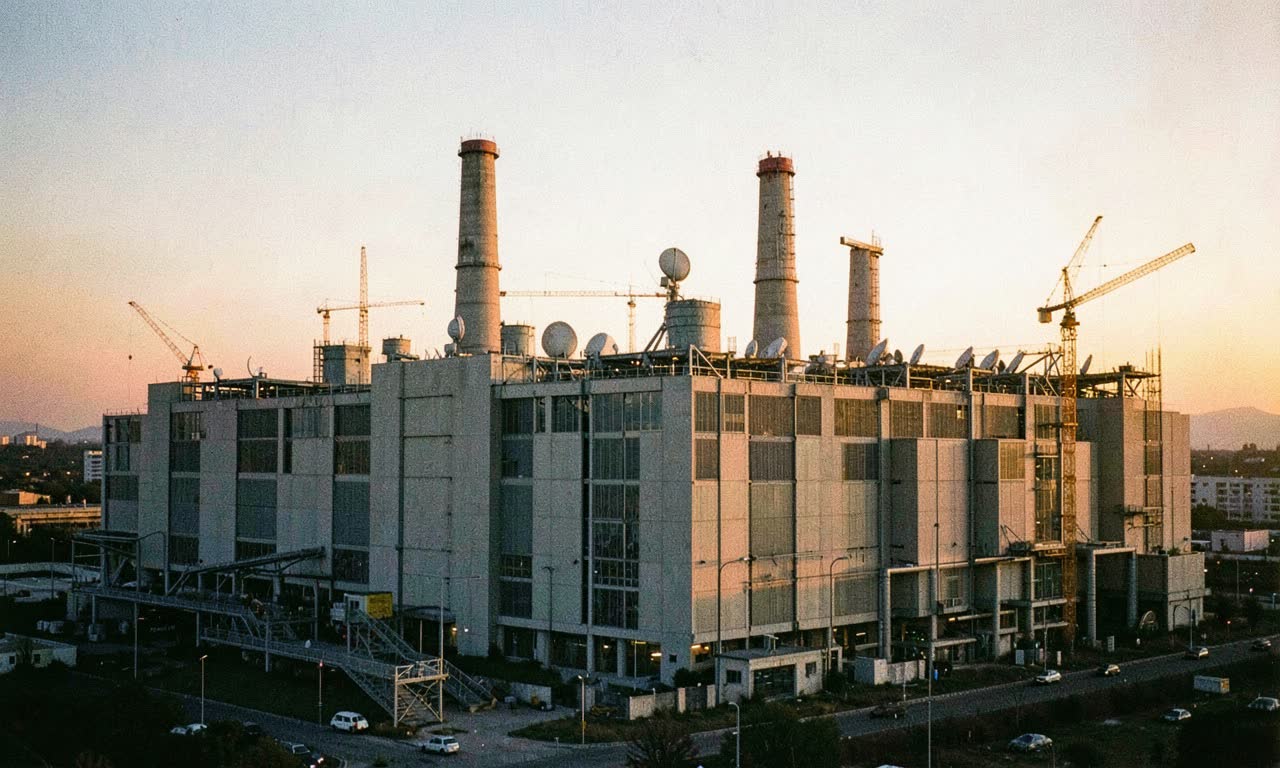
Alphabet spent $45 billion on capital expenditures in the second quarter alone, according to the BBC’s reporting. Roughly 60% went to servers — the GPUs and TPUs that power AI training and inference — and 40% to data centres, the physical buildings that house them. That’s up from $36 billion in the first quarter, and the trajectory is steepening.
Ashkanazi was blunt about where the money is going: the negative free cash flow was “due to growing capital expenditures, essentially all of which was related to AI spending.” Not search infrastructure. Not YouTube bandwidth. AI.
This builds on Google’s already massive infrastructure build-out. The company has been on a rental spree with SpaceX for compute capacity and has been racing to deploy Rubin GPUs at scale. The $205 billion annual figure is the aggregate of all of it — chips, buildings, power contracts, cooling systems, and the people to run them.
Cloud Revenue Is Rocketing — But So Are the Costs
Google Cloud’s revenue surged 82% in the second quarter, according to The Information, nearly 20 percentage points faster than the previous quarter. AI services and chip sales are the engine. Alphabet’s overall revenue grew 24%, lifted by the cloud explosion.
But the cost side is growing faster. Google Cloud’s revenue is rocketing, but the cost of AI expansion is rocketing right alongside it — and for now, the spending curve is steeper than the revenue curve. That’s the dynamic that produced the negative free cash flow.
CEO Sundar Pichai framed it as early-stage investment: “What I see with what you can do with frontier capabilities, there is still a lot of work left to do to translate that into experiences for our users. So that looks like extraordinary opportunities with extraordinary returns.” He called the plans “disciplined.”
Rachel Winter, a partner at wealth management firm Killik & Co, told the BBC there was “a bit of surprise among investors about how much Google was spending.” The $195–205 billion range “suggests there is a little bit of concern about those levels.”
Tesla Is Doing the Same Thing
Google isn’t alone. Tesla also reported negative free cash flow of $1.1 billion for the second quarter, its first negative showing in two years. Tesla’s CFO Vaibhav Taneja said the company will spend as much as $25 billion this year, more than double its 2025 capital spending, and that spending would “probably increase further over the next three years.”
Both stocks dropped 4% in after-hours trading. The market is watching the biggest AI investors spend unprecedented sums and is starting to ask the question that has haunted every AI boom cycle: when does the revenue catch up to the capex?
The NZ Angle
New Zealand companies don’t face this problem directly — no Kiwi firm is spending $205 billion on AI infrastructure. But the spend shapes the market everyone else operates in. When Google and Microsoft pour hundreds of billions into compute capacity, they set the price floor for cloud AI services that NZ businesses consume. The cloud bill shock that hit small businesses using AWS and Google Cloud AI APIs is a direct consequence of this infrastructure arms race.
There’s also a sovereignty question. If the biggest players are spending more than they earn to build AI capacity, smaller countries buying access to that capacity are renting from companies that may not be profitable in the medium term. That’s a fragile foundation for national AI strategy — and it’s part of why the sovereign AI debate has gained traction in New Zealand.
❓ FAQ
Why did Google’s free cash flow go negative?
Alphabet spent $45 billion on capital expenditures in Q2, mostly on AI servers and data centres. That exceeded the cash the business generated after operating expenses, producing negative $5.9 billion in free cash flow — the first time in at least a decade.
Is Google losing money?
No. Revenue grew 23% to $119.8 billion and the company is highly profitable on an operating basis. The negative free cash flow means capital investments (building data centres, buying chips) exceeded operating cash generation — not that the business is unprofitable.
How much is Google spending on AI this year?
Alphabet raised its full-year capital expenditure guidance to $195–205 billion, up from a previous $190 billion estimate. The CFO said “essentially all” of the increase is AI-related.
Should NZ businesses be worried?
Not directly — but the spending sets the price floor for the cloud AI services NZ companies buy. When Google and Microsoft spend more than they earn building capacity, the cost gets passed through to customers. It also raises questions about relying on infrastructure owned by companies that may be burning cash for years.
🔍 THE BOTTOM LINE
Alphabet just spent more on AI infrastructure than it earned in cash for the first time in a decade. The company says it will keep spending — $205 billion this year, rising — because “the demand still outpaces that investment.” Maybe it does. But the 4% stock drop says the market is starting to wonder whether the returns will arrive before the bills do. Google is betting the entire farm that AI transforms its business fast enough to justify the biggest capital expenditure programme in corporate history. The next few quarters will show whether that bet is paying off — or just getting more expensive.