The coffee robot is back, and this time it brought a university. Shanghai Hi-Dolphin Robot Technology announced this week that a delegation from the University of New South Wales visited the company in Shanghai to explore commercialization of COFE+, its seventh-generation robotic café, including potential campus deployments. The account comes from the company’s own release — there is no independent reporting on the visit yet — but the machine it describes is a useful window into how far service robotics has slid from novelty to infrastructure.
What a seventh-generation coffee robot actually does
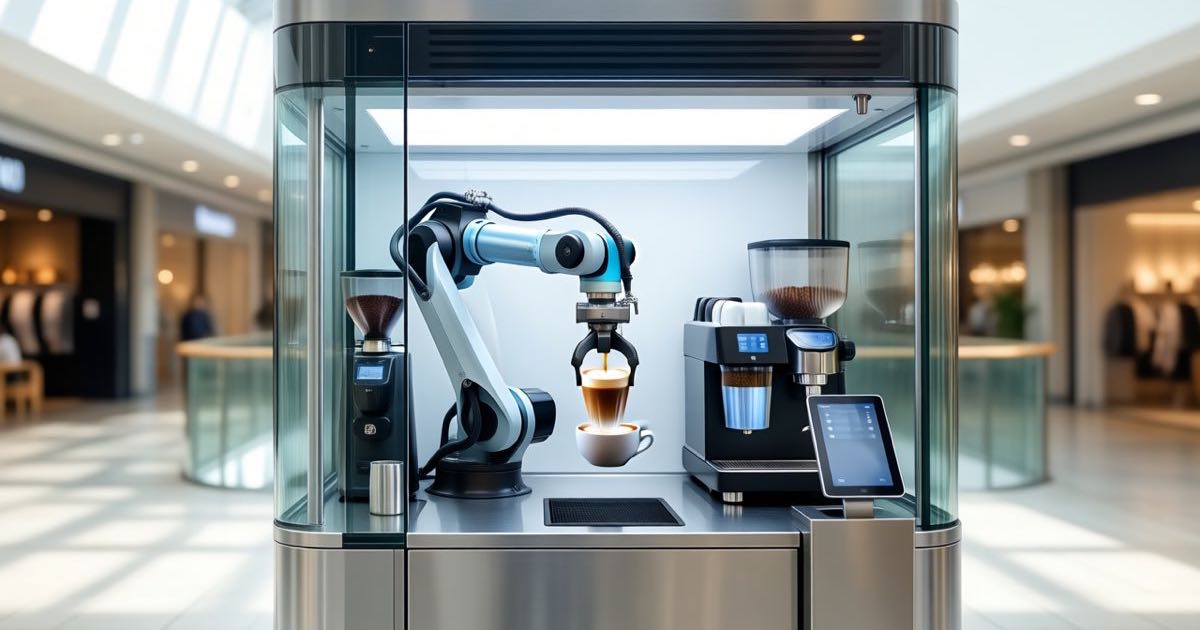
COFE+ is a self-contained kiosk: 2.35 square metres of floor space wrapped around a six-axis robotic arm and what the company calls an AI “smart store brain.” The software side digitally controls the variables a barista would — extraction pressure, water temperature, grind, ingredient ratios — while the hardware handles the sequence from beans to cup. The company says the current generation supports more than 300 beverages across eight categories, thousands of customizable taste parameters, automated latte art, and edible 3D foam printing that can put a logo or a message on top of a drink.
The pitch is 24/7 autonomous beverage service with minimal on-site staff, which is the entire business case: no café needs to be closed when there is nobody in it, and no barista needs to be there at 3am. According to the company, COFE+ has deployed in more than 70 countries across five continents, in hundreds of cities and thousands of commercial locations, backed by more than 120 international patents. Those figures are company-stated and unverified — treat them as the marketing they are. What is not marketing is that this product category exists in volume, and has for several years.
Why the university visit matters
The UNSW angle is the story’s most credible hook, precisely because a research university has little incentive to be in a vendor’s press release. Universities are, in one sense, the perfect proving ground for this kind of automation: a captive population with round-the-clock caffeine demand, high labour costs, and an administration that can measure exactly whether the machine’s coffee is drinkable. Campus deployments were among the applications discussed, according to the release.
There is also a quieter signal in an Australian university engaging with a Chinese robotics company on commercialization rather than a trade mission photo-op. Service robots are one of the few robotics categories where Chinese vendors hold genuine global scale — the pattern we saw with UBTech’s thousand-unit humanoid deployment at Liuzhou — and the engagement runs in the direction of “come see our production line,” not “here is a concept video.”
“Robotics should not be about replacing people. It should be about freeing people from repetitive work and giving them more opportunities to create, innovate and enjoy a better life,” said Dr. Han Feizi, founder of Shanghai Hi-Dolphin, in the release. It is the standard reassurance line for this industry, and like all such lines it sits awkwardly next to a machine whose core selling point is that a café can run without staff.
The honest read
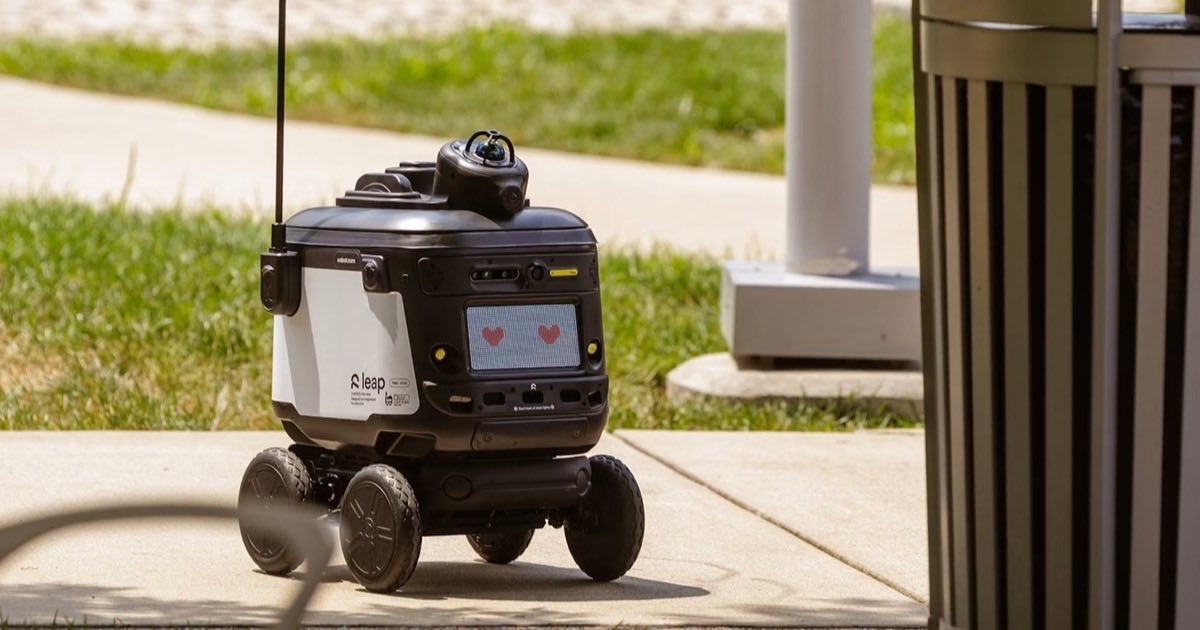
Scepticism is warranted on the numbers: deployment counts, patent totals, and the claim of thousands of locations all trace back to one source with an obvious interest in the answer. What the story gets right anyway is the direction. Automated beverage service has moved from viral-video gimmick to boring commercial reality — the same trajectory as the delivery robots now routinely working footpaths and campuses — and the remaining questions are the dull, decisive ones: uptime, cost per cup, and whether anyone can taste the difference.
A university campus trial would answer those questions in public. If one eventuates at UNSW, it will be worth watching — for the coffee, and for what it says about which service-robot categories survive contact with daily use.
[For where service robotics actually stands beyond the demos, see our explainer on why delivery robots are real, not just viral video, and our coverage of UBTech’s 10,000-humanoid factory build.]