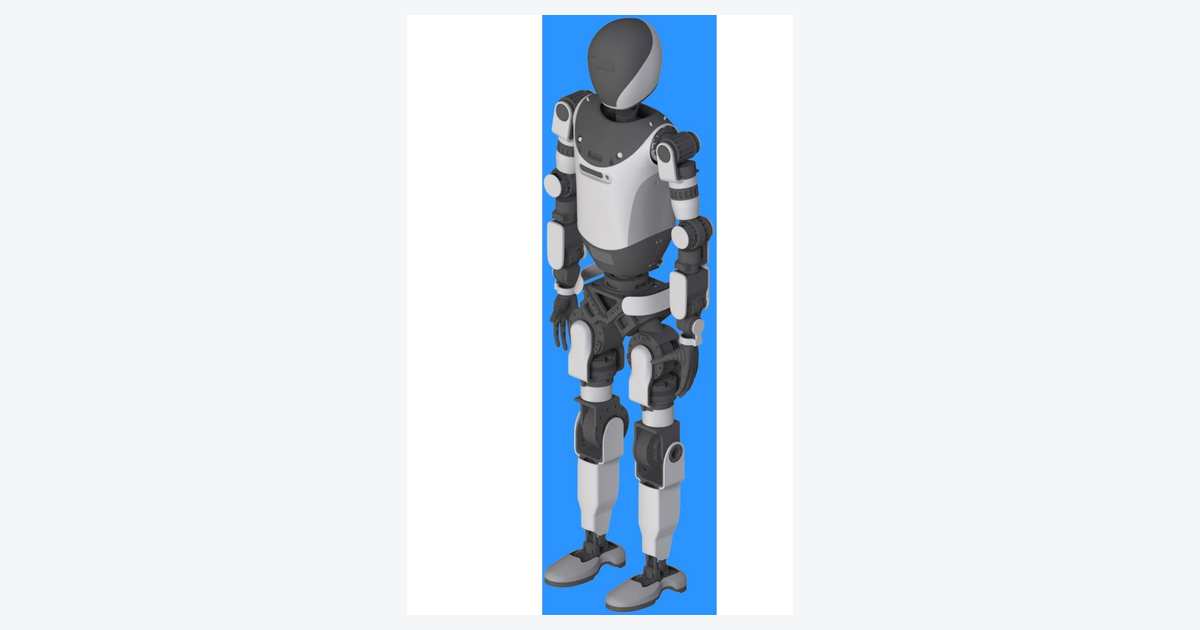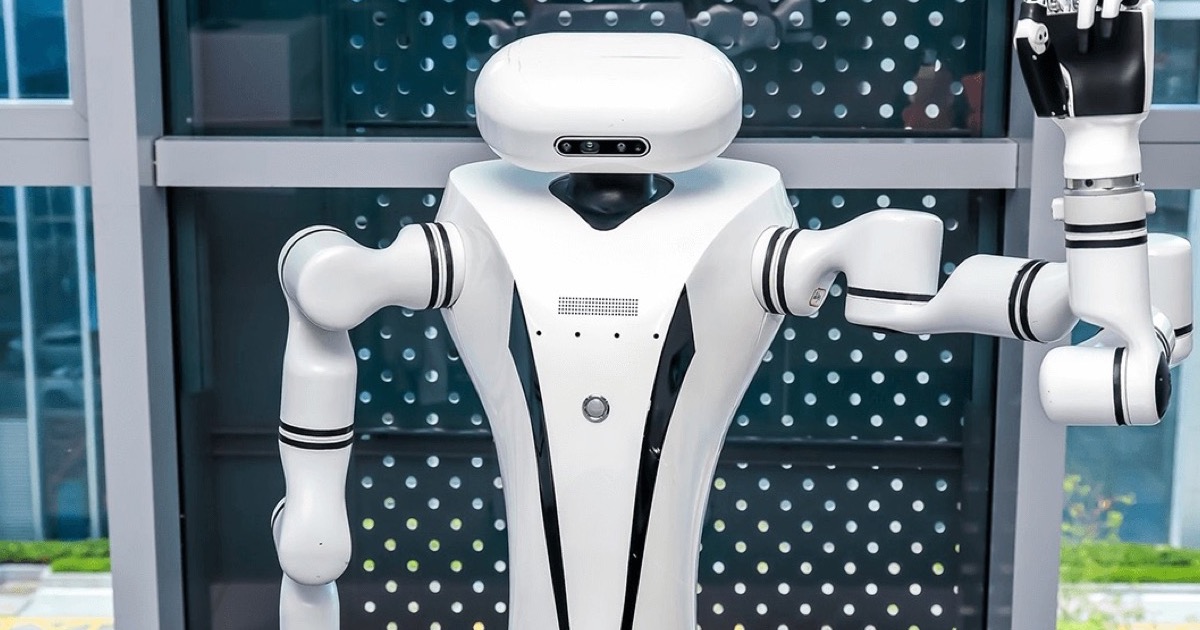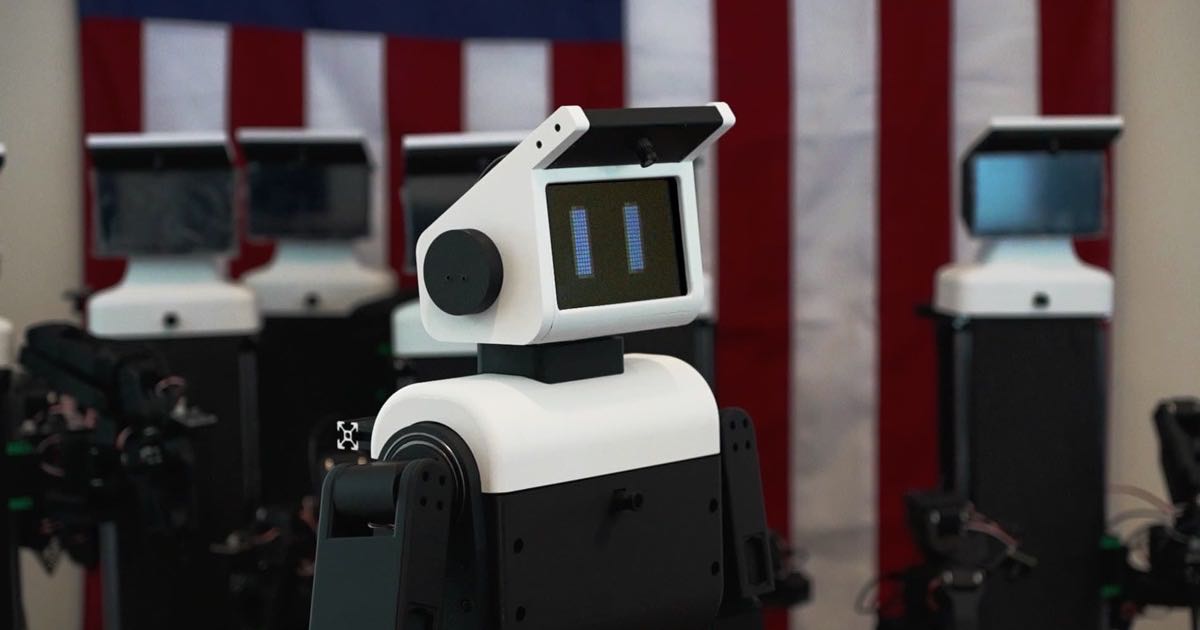
A Y Combinator S26 startup called Nori Robotics ran a Launch HN post this week for the Nori A3: a 19-degree-of-freedom bimanual mobile robot priced at $1,688, assembled in San Francisco, shipping this fall. The founder, Antonio, started the project while doing robotics research at Columbia, and the pitch is simple — most labs have one or two expensive robots, which makes it hard to collect large datasets or test across multiple units, so he built the affordable version himself.
The spec sheet is surprisingly complete for the price: two 7+1 DOF arms with 1.5 kg payload each, a 55 kg telescoping lift, a differential wheeled base, four 720p RGB cameras, 2D lidar, a dual microphone array, a 432 Wh battery, and an onboard Raspberry Pi 5 handling SLAM and safety systems. Heavier models — ACT policies, vision-language-action models — run offboard over LAN or WAN.
The engineering trade-offs are the honest part
The founder is upfront about how they hit the price: high-ratio servos instead of quasi-direct-drive motors, and wheels instead of legs. That’s why it’s $1,688 and not $16,000. It also means this isn’t a Unitree G1 competitor — it won’t run, jump or climb stairs. It’s a mobile manipulation platform, and the comparison set is closer to a low-cost research robot than an Atlas rival.
What makes the launch thread worth reading is the quality of the pushback. One commenter asked directly whether the videos — including one of the robot handling laundry — are staged or cherry-picked, and what the genuine results would be if you let it loose in a messy room. Another pointed out that the laundry video shows the robot awkwardly tossing clothes into a pile, and argued including it “suggests the claimed capabilities are more show than substance.” A third raised the K-Scale Labs ghost: that community shut down partly because it couldn’t compete with low-cost Chinese robots, and asked what makes Nori’s business model sustainable.
The founder’s answer on the cost structure — 100+ moving parts, servos instead of QDD actuators, design-for-repair with printable 3D replacement parts — is a real engineering argument, not marketing. Whether $1,688 is actually sustainable at scale is the open question the thread doesn’t resolve.
Why the price point matters more than the demo videos
Here’s my read: the laundry video is beside the point, and so are the “it’ll set my kitchen on fire” jokes. The Nori A3 isn’t a home robot yet — it’s a data collection and development tool. The entire bet of embodied AI right now is that robot foundation models improve with training data the way LLMs did, and training data is bottlenecked by hardware access. At $1,688, a lab, a university course, or a hobbyist can afford several. That’s the same logic behind NVIDIA’s open humanoid reference robot for universities, and behind Unitree’s decision to sell the R1 at consumer pricing.
The market context makes the number starker. Typical humanoid platforms run $30,000–$150,000. YC’s company page describes Nori as “an American humanoid which costs 3% of the competition.” Chinese makers have already pushed units below RMB100,000, and the US has responded to Chinese humanoid dominance with import restrictions rather than price competition. A sub-$2,000 US-assembled platform, whatever its limits, is aimed straight at that gap.
The questions that matter now: real-world task success rates in unstructured environments, whether the Skills Marketplace (train at home, share skills) gains actual adoption, and whether first-batch buyers become repeat dataset producers. Watch what owners publish, not what the launch videos show.
FAQ
What is the Nori A3? A $1,688 bimanual mobile humanoid robot from Y Combinator-backed Nori Robotics, with 19 degrees of freedom, two 7+1 DOF arms, a wheeled base, four cameras and 2D lidar. It ships fall 2026.
Why is the Nori A3 so cheap compared to other humanoids? It uses high-ratio servos instead of quasi-direct-drive motors and a wheeled base instead of legs, and it’s designed for manufacturability and repair — cutting cost by skipping the expensive locomotion hardware.
Is the Nori A3 a home robot? Not yet. It’s aimed at robotics developers and researchers who need affordable hardware for data collection and experimentation, though the company markets home-task ambitions.
— CJ Murden, editor of Singularity.Kiwi. Former digital technologies teacher, author of AI-focused books. Writing with a New Zealand focus.