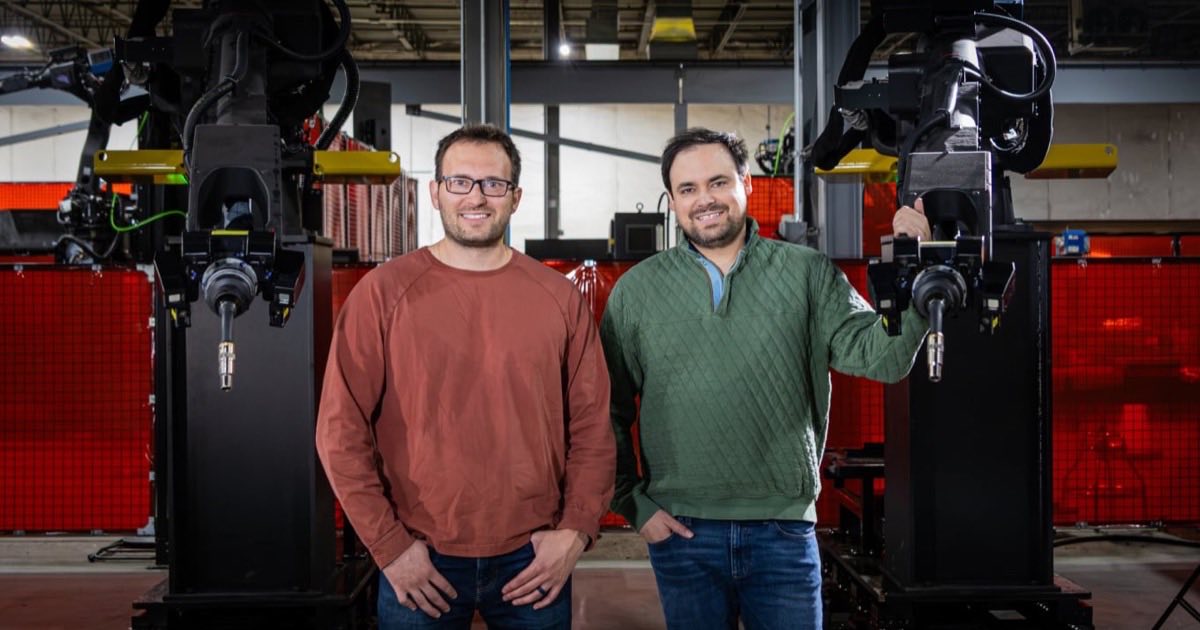
Ohio startup Path Robotics has raised $300 million in Series E financing at a $2.45 billion post-money valuation, led by AI-focused growth equity firm Georgian, according to the company’s announcement. Bloomberg reported the deal nearly quadruples the company’s valuation, and The Next Web’s coverage notes it lands just two weeks after Bedrock Robotics raised $600 million for autonomous excavators. Total funding since the 2018 founding now exceeds $610 million.
The numbers behind the round explain the price tag. Path’s annual recurring revenue grew 17-fold over the past 18 months, per the company’s announcement, and headcount is up 97% year-over-year with a target of 400 employees by year-end. Existing investors Addition, Drive Capital, IronArc Ventures, Tiger Global and Yamaha Motor Ventures all returned; D.E. Shaw Ventures and NAVER Ventures are new. Georgian partner Emily Walsh joins the board, saying Path is “well positioned to become one of the defining companies in industrial physical AI.”
The technology bet is called Obsidian — an AI model that lets welding robots find joints, plan welds, and adapt as conditions change rather than following fixed programs. And the expansion path is where it gets interesting: Rove, the company’s system putting Obsidian on a Boston Dynamics quadruped so the robot can weld parts where they stand, with 50 preorders being filled and shipyard, construction and heavy-industrial deployments slated from next year, according to CEO Andy Lonsberry’s comments to Bloomberg via The Next Web.
The customer list skews toward defence-adjacent manufacturing: shipbuilder HII, Lockheed Martin and Saronic, which builds autonomous military vessels. Earlier this year Path signed a $600 million performance-based production agreement with HII aimed at US Navy shipbuilding, The Next Web reports. Lockheed Martin Ventures’ Chris Moran framed the work as helping “expand capacity” and strengthen “America’s defense industrial base,” per the company’s release.
That defence anchor is doing a lot of work in this round. When a robotics company’s marquee customers are the Navy’s shipbuilders, the $2.45 billion valuation is being underwritten partly by defence budgets, not just factory demand — the same pattern as Anduril’s ascent, where military procurement effectively subsidises the commercial technology. For New Zealand’s robotics sector, which sells largely into agriculture and industrial niches, the lesson cuts both ways: defence anchor tenancy offers scale and stability, but it also ties a company’s fortunes to government spending cycles that can turn with an election. Lonsberry told Bloomberg the company also plans expansion into defence and energy infrastructure — both budget-driven sectors.
The labour argument Lonsberry offered Bloomberg is worth noting verbatim: “None of our customers have ever fired a welder because of a task robot.” That framing — robots filling unfilled shifts rather than displacing workers — has become the standard pitch for industrial physical AI, and it is not empty. Skilled-trades scarcity is real across shipbuilding and heavy fabrication. It is also the pitch every robotics CEO now makes, so the claim deserves watching as deployments scale: if customers do start reducing welding headcount once Rove fleets mature, the “capacity not replacement” line will be tested in public.
The round is the latest in a string of nine-figure robotics raises the site has tracked — Bedrock’s $600 million Series C two weeks ago for self-driving excavators, and Nominal’s $240 million for defence-manufacturing software before that, alongside synthetic-world startups like Physicl building robot training environments. If IFR’s count of 5 million industrial robots operating worldwide keeps climbing, the money is chasing a real labour gap — and a robot dog that welds parts where they stand is a logical next step beyond the fixed welding cell.
Sources: Path Robotics official announcement; The Next Web (10 November 2026); Bloomberg reporting cited by The Next Web. Path Robotics first reported the raise on 10 November 2026 (NZT 11 November).