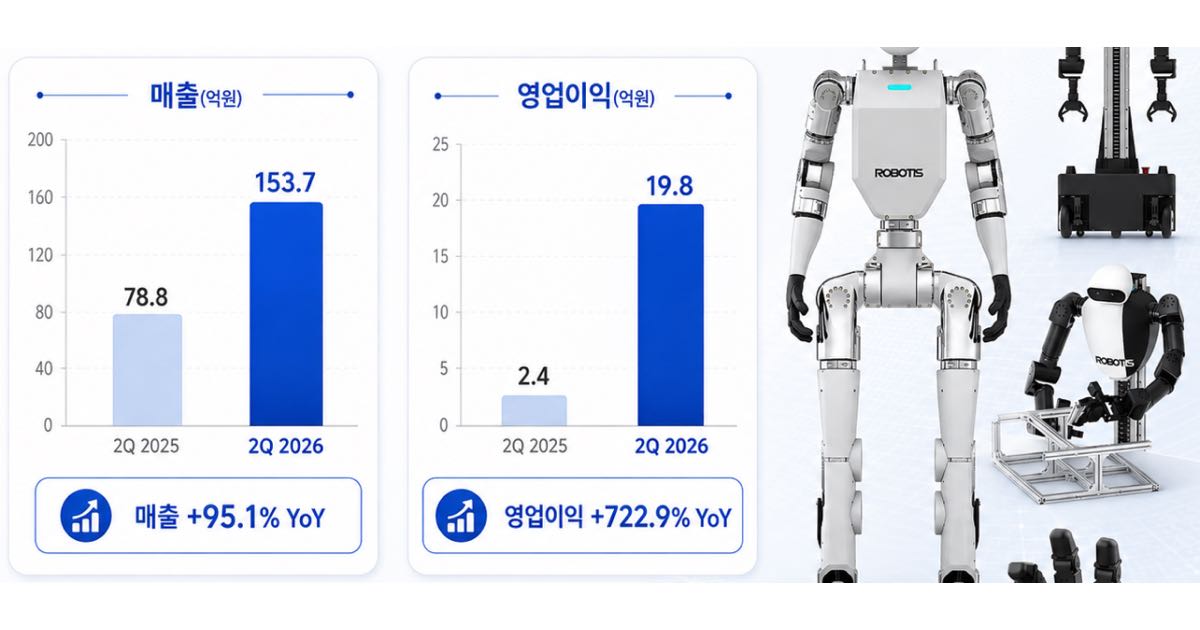
Robotis, a South Korean robotics components company, posted second-quarter operating profit of 1.98 billion won (approximately NZ$2.3 million), up 722.9 per cent from the same period last year. Revenue reached 15.37 billion won (approximately NZ$17.8 million), a 95.1 per cent increase. The numbers, filed in a regulatory disclosure on August 14, confirm what the humanoid robotics industry has been signalling for months: the components supply chain is where the money is right now.
What makes these numbers worth paying attention to is what’s driving them. Actuators — the motorised joints that let humanoid robots walk, grasp, and move — accounted for 98 per cent of Robotis’s total revenue in the first half of 2026. The company is not building humanoid robots for consumers. It is selling the parts that make every other company’s humanoids possible.
The Dynamixel Business
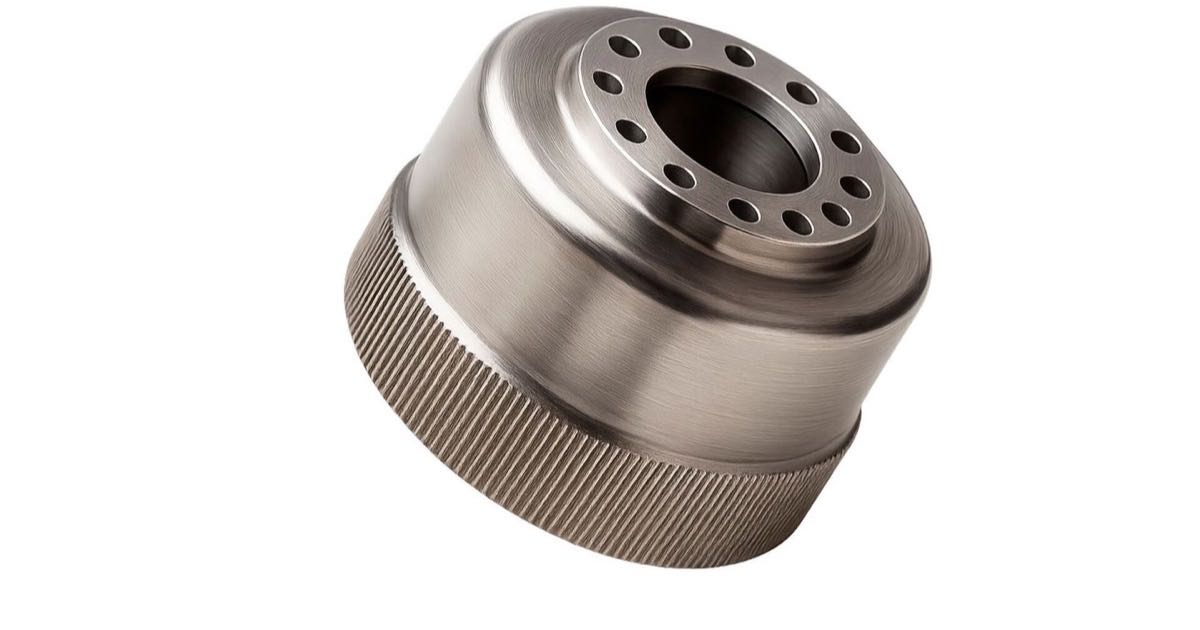
Robotis’s flagship product is the Dynamixel, a module that integrates a motor, gear reducer, controller, and communication functions into a single unit. Think of it as a self-contained joint — plug it in, send it a command, and it moves with precise positional control. The product line has been around for years, primarily serving research labs and educational robotics. What changed in 2026 is the customer base.
First-half actuator revenue hit 26.67 billion won (approximately NZ$30.9 million), representing 97.99 per cent of consolidated revenue. Autonomous mobile robot sales contributed just 548 million won — about 2 per cent. This is a components company, full stop.
The growth is concentrated in China. According to Robotis’s semi-annual report, China-bound revenue share in the second quarter rose roughly threefold compared to the first quarter. The company reopened its Chinese subsidiary in February after a period of dormancy. The driver is clear: Chinese humanoid manufacturers are preparing for mass production and need reliable, certified actuator suppliers at scale.
The China Pivot
The geographic shift matters. Robotis is simultaneously targeting replacement demand for Chinese-made components in the North American market, leveraging FCC approval for its products. The strategy is twofold: sell to Chinese robot makers who need precision components, and sell to Western companies looking for non-Chinese supply chain alternatives.
This is the classic picks-and-shovels position during a gold rush. Whether Unitree’s 18,000 deployed humanoids or Hyundai’s 20,000-robot target succeed at scale, both need actuators. Robotis doesn’t have to pick the winning humanoid platform — it just has to supply joints to all of them.
What’s Coming in H2
The second half of 2026 brings two product launches that could reshape the company’s trajectory. The Dynamixel-Q is a quasi-direct-drive actuator designed specifically for humanoid walking and joint actuation, with high-torque and high-response performance. Robotis claims it is priced on par with Chinese competitors while delivering superior precision and durability. Mass production is slated for the Uzbekistan facility starting in 2027, backed by a 60 billion won (approximately NZ$69.5 million) investment.
The second launch is AI Sapiens, a full-body bipedal humanoid that Robotis developed in just two months — from March start to May completion. The robot uses Dynamixel-Q actuators exclusively across its body, with smaller Q-series models in the upper body and larger ones in the legs. Robotis plans to open-source the mechanical design and core control code, positioning AI Sapiens as a research and industrial platform rather than a commercial product.
This is a strategic move. By open-sourcing the platform, Robotis creates a showcase for its actuators. Every university and research lab that builds on AI Sapiens becomes a potential bulk buyer of Dynamixel-Q modules. The robot becomes the marketing vehicle for the components business.
The World Robot Conference Stage
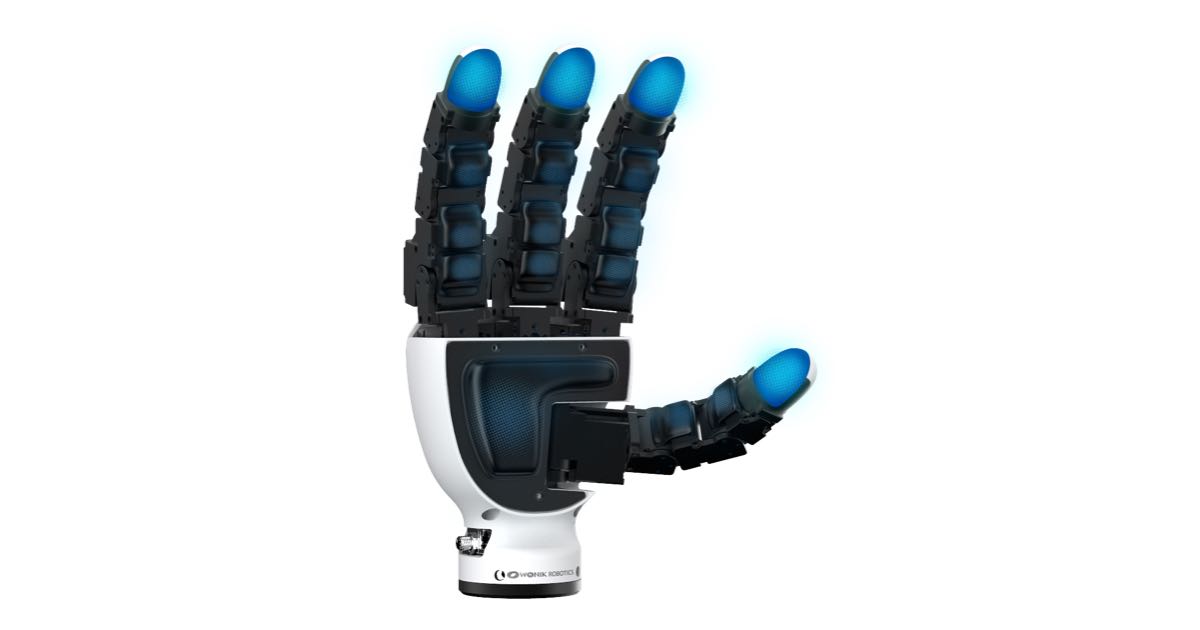
Robotis is the only South Korean company participating in the 2026 World Robot Conference in Beijing, running August 19-23. The event has grown from 50,000 visitors in 2015 to 270,000 last year, with approximately 300 exhibitors this year — a 36 per cent increase. Robotis will showcase AI Sapiens, its semi-humanoid AI Worker, the HX5-D20 robot hand, and the Dynamixel-Q.
The WRC appearance is significant. China’s humanoid robotics market is the largest in the world by deployment volume, and South Korean companies have been largely absent from the hardware side despite the country’s strengths in semiconductors and AI software. Robotis is positioning itself as the bridge — a non-Chinese supplier with products priced for the Chinese market.
NZ Angle
New Zealand’s robotics sector is small but growing, particularly in agricultural automation and forestry. The components supply chain dynamic that Robotis represents — a specialist supplier capturing disproportionate value from the humanoid boom — has a local parallel. NZ-based robotics companies building for agricultural applications typically import actuators from overseas. As the global actuator market scales and prices drop through mass production, the economics of building custom robotic systems in NZ improve. The Dynamixel-Q’s pricing parity with Chinese alternatives is the kind of development that makes bespoke agricultural robotics more viable for Kiwi builders.
❓ FAQ
What is an actuator and why does it matter for humanoid robots? An actuator is the component that converts electrical signals into physical movement — essentially a robotic muscle. Humanoid robots need dozens of them: each joint in each finger, wrist, elbow, shoulder, hip, knee, and ankle requires one. The quality, precision, and cost of actuators directly determine how well a humanoid moves and how much it costs to build.
Why is Robotis’s profit growth so dramatic? The base was small. A 723 per cent increase on a modest prior-year number produces an eye-catching percentage but a still-modest absolute profit (1.98 billion won, or about NZ$2.3 million). The significance is the direction and velocity, not the size — it signals that humanoid component demand has crossed from research-scale to production-scale purchasing.
Is Robotis competing with Chinese actuator makers? Yes, but with a differentiation strategy. Chinese actuator manufacturers compete primarily on price. Robotis is positioning Dynamixel-Q at parity pricing with Chinese products while claiming superior precision and durability. The FCC certification also gives it access to the North American market where companies are actively seeking non-Chinese suppliers.
What does open-sourcing AI Sapiens mean for competitors? It means Robotis is giving away the robot design to sell more actuators. The open-source approach is a customer acquisition strategy, not a charity exercise. Every researcher who builds on AI Sapiens needs Dynamixel-Q joints. It’s the razor-and-blades model applied to humanoid robotics.